Jātrā: The Journey Within is a four-part global documentary series in development about finding a sense of belonging—
to nature, to each other, and to our own selves.
Growing up in post-colonial India, Nupur, the filmmaker, grew up surrounded by traditions she didn’t understand and blindy rejected, only to find out years later, they held wisdom for what had always been elusive – belonging.
That search for belonging took Nupur across cultures and into living ancestral traditions that have sustained these connections for centuries.
Discovering who we are often means finding our way back to where we come from—to what was handed down to us, then somewhere along the way forgotten, rejected, or pushed away.
For filmmaker Nupur Chitalia, that return began with traditions she grew up around but never truly understood. Once dismissed as outdated or illogical, they returned during a period of physical and inner turmoil, slowly revealing their capacity to cultivate love and belonging.
Her return to her own roots sent her across cultures, learning from people about the traditions they inherited and the ways they continue to live them. Through these encounters, she begins to recognise how relationships she once experienced as separate—with nature, with others, and with herself—have always been deeply intertwined.
Told through the evolving lens of its maker, Jātrā explores what survives across generations and why, and what becomes possible when we give these relationships our attention.
Jātrā is a word shared across languages, carrying different meanings. In Gujarati, Nupur’s native language, it means a pilgrimage—a sacred journey.
A pilgrimage begins with the understanding that a place can ask something of the person travelling toward it. Reaching it may involve a change in how we see, how we listen, or how we live.
In this Jātrā, the destination is bound up with what was inherited long before the journey began. The familiar becomes a place of discovery. We can grow up surrounded by a tradition and spend years learning how to enter it.
An inner journey can happen in the dingiest corner of the darkest room. Sometimes, that is where the most consequential journeys begin.
For Nupur, the journey offered by her roots has taken her across the world. Yet the further she travels, the more the encounters ask her to examine what she carries: certainty, judgement, preconceptions, and the desire to understand before learning how to experience.
Her traditions begin to call for a deeper kind of attention. They ask to be lived.
There is a curious turn here: the destination has offered the journey. Her roots are both what she is returning to and what set her in motion. Perhaps arriving begins when we allow the journey to change us.
Jātrā is envisioned as a four-part cinematic documentary series. Its chapters follow a personal return while exploring three fundamental relationships: nature, community, and self.
Part One — The beginnings of the journey
Nupur’s disconnection from the traditions she grew up around in India establishes the personal and historical foundation of the series. The chapter explores the broader forces that contribute to cultural disconnection, alongside the experiences that led her to conceive Jātrā as a personal pilgrimage in 2023.
Part Two — Nature
How do traditions cultivate intimacy, reciprocity, and care for the natural world? This chapter encounters ways of relating to water, land, and the living world that transform distance and utility into relationship.
Part Three — Community
How does belonging become something people practise together? Ritual, collective practice, and inherited social structures reveal forms of care and responsibility that extend beyond the individual.
Part Four — Self
What might we encounter beneath the everyday noise? Practices of attention, contemplation, ritual, and surrender open ways of knowing the self we rarely stop to meet.
Throughout the series, each chapter moves between cultures. A gesture, element, idea, or experience in one tradition can lead visually or thematically into another. These encounters gradually reveal relationships while allowing each tradition to retain its distinct history, meaning, and worldview.
Featured Practices
Behind the Journey
Who am I? Where do I truly come from?
These questions have outlived every generation that has asked them. There has never been a wrong time to return to them.
We live in a time of extraordinary possibilities and profound uncertainty, as the boundaries between the human and the artificial grow increasingly blurred, while environmental, social, and political challenges reshape the world around us.
Jātrā turns toward practices that have endured through centuries of change, asking what they continue to hold for us—and why generations have chosen to carry them forward.
The questions are timeless. Each generation has to learn how to live with them.
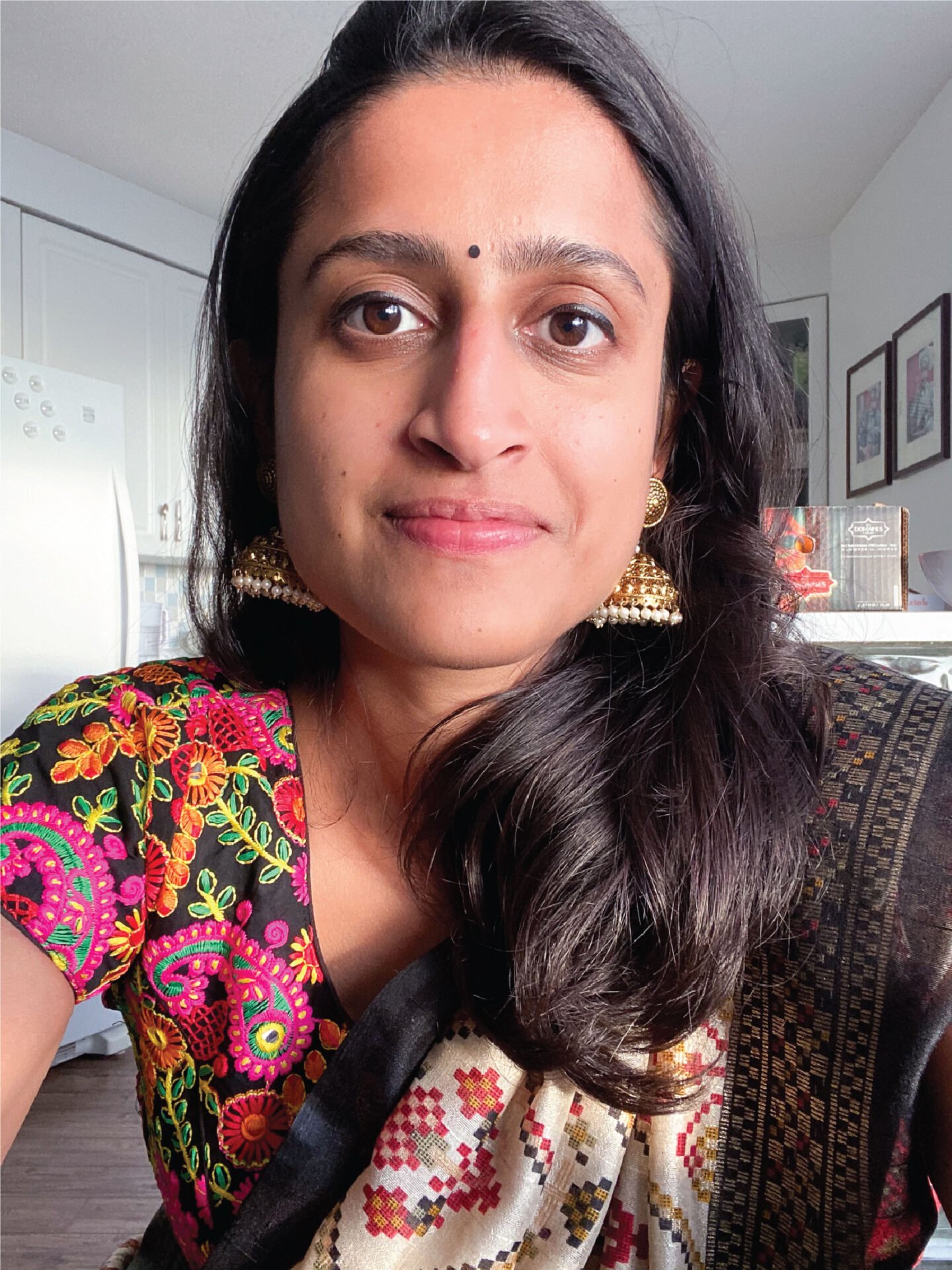
Nupur Chitalia
“I became a filmmaker to move people as cinema has moved me.”
Nupur is an award-winning filmmaker whose work spans feature films, web series, and short films. Her storytelling is intertwined with her evolving identity and longing to connect with her roots. She runs her own production house, Nucraft Productions, and has spent seven years crafting stories at the University of Toronto.
Beneath Jātrā’s global journey lies a deeply personal return to Pushtimarg, the Vaishnav philosophical tradition in which she was raised. Founded by Vallabhacharya, Pushtimarg is rooted in Shuddhadvaita, or pure non-dualism. Its philosophy explores one’s sense of identity and ownership and the relationship between unity and multiplicity, offering daily practices through which that understanding can be lived and relished.
The traditions she encounters challenge and deepen her relationship with these principles. Each retains its own meaning; the journey asks her to reconsider her own understanding.
This inquiry also reaches into the making of Jātrā. How might these principles shape the way she creates, collaborates, and responds to uncertainty? She can name them in moments. Learning to live them may take a lifetime.
For producers, broadcasters, investors, and potential collaborators.
Request a private preview | Get involved